
Spreading international humanitarian law
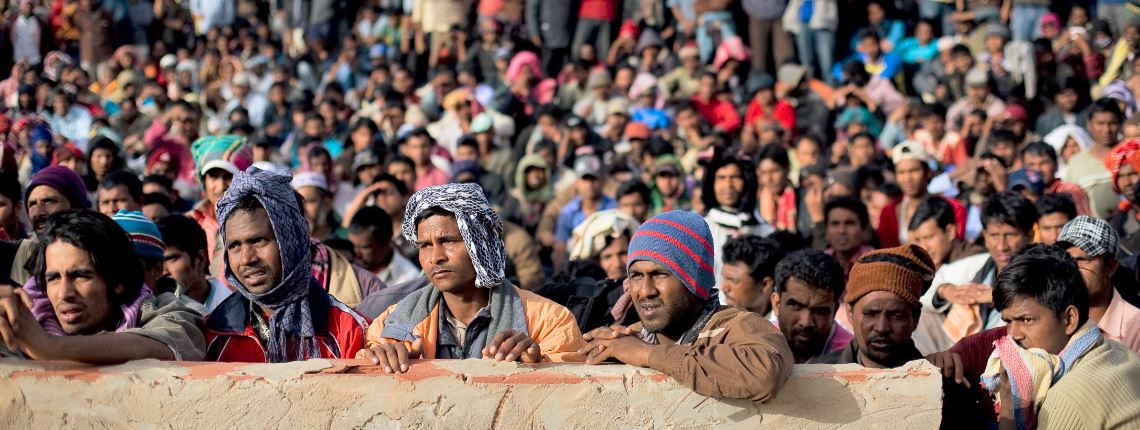
International humanitarian law (IHL) contains the body of rules that seeks to limit the humanitarian consequences of armed conflict. This law protects the life, health and dignity of persons who do not or no longer participate in an armed conflict. This includes civilians, but also, for example, medical personnel and other groups. The law also restricts or prohibits the use of certain weapons and methods in armed conflict.
The international Red Cross movement occupies a key position in the development and dissemination of these rules. Under the 1949 Geneva Conventions, signed by 196 countries, International Committee of the Red Cross has the unique mandate as an independent and neutral organization to provide protection and assistance to victims of armed conflict and other situations of violence. Additionally, the National Red Cross Society in each country, as an auxiliary to the government, assumes the role of disseminating and promoting information and knowledge about international humanitarian law. Belgian Red Cross-Flanders also assumes this core task.
We take this role actively by...
-
Disseminate knowledge and information through training. For example, we organize an annual series of classes covering basic topics, we organize a moot court competition (Frits Kalshoven Competition), and so on. So be sure to keep an eye on our trainings and events if you are interested.
-
Create awareness through public campaigns and media publications.
-
Support policy makers in the development and implementation of international humanitarian law.
Ask us your question about the IHR
Our trainings and events
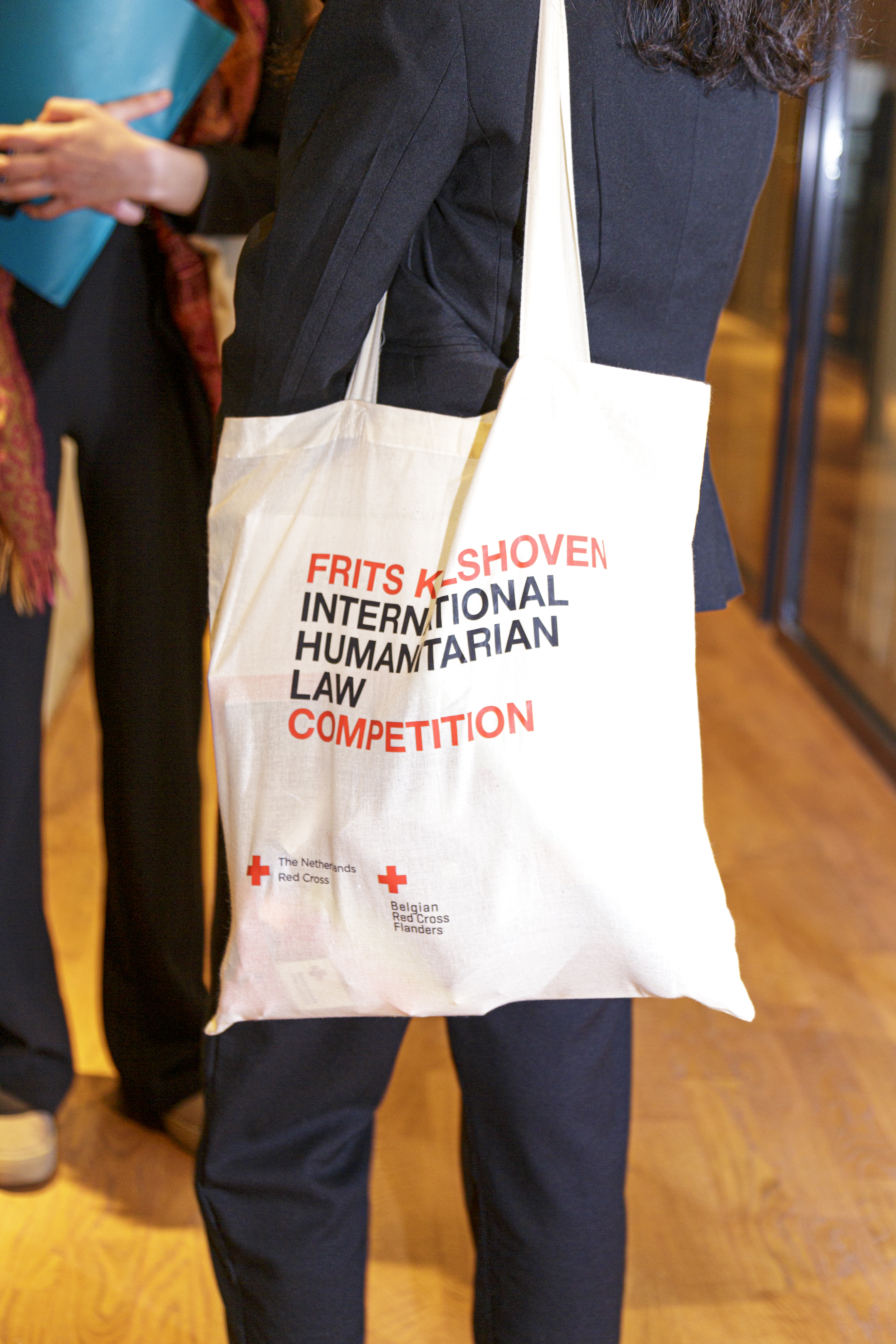
Frits Kalshoven Competition
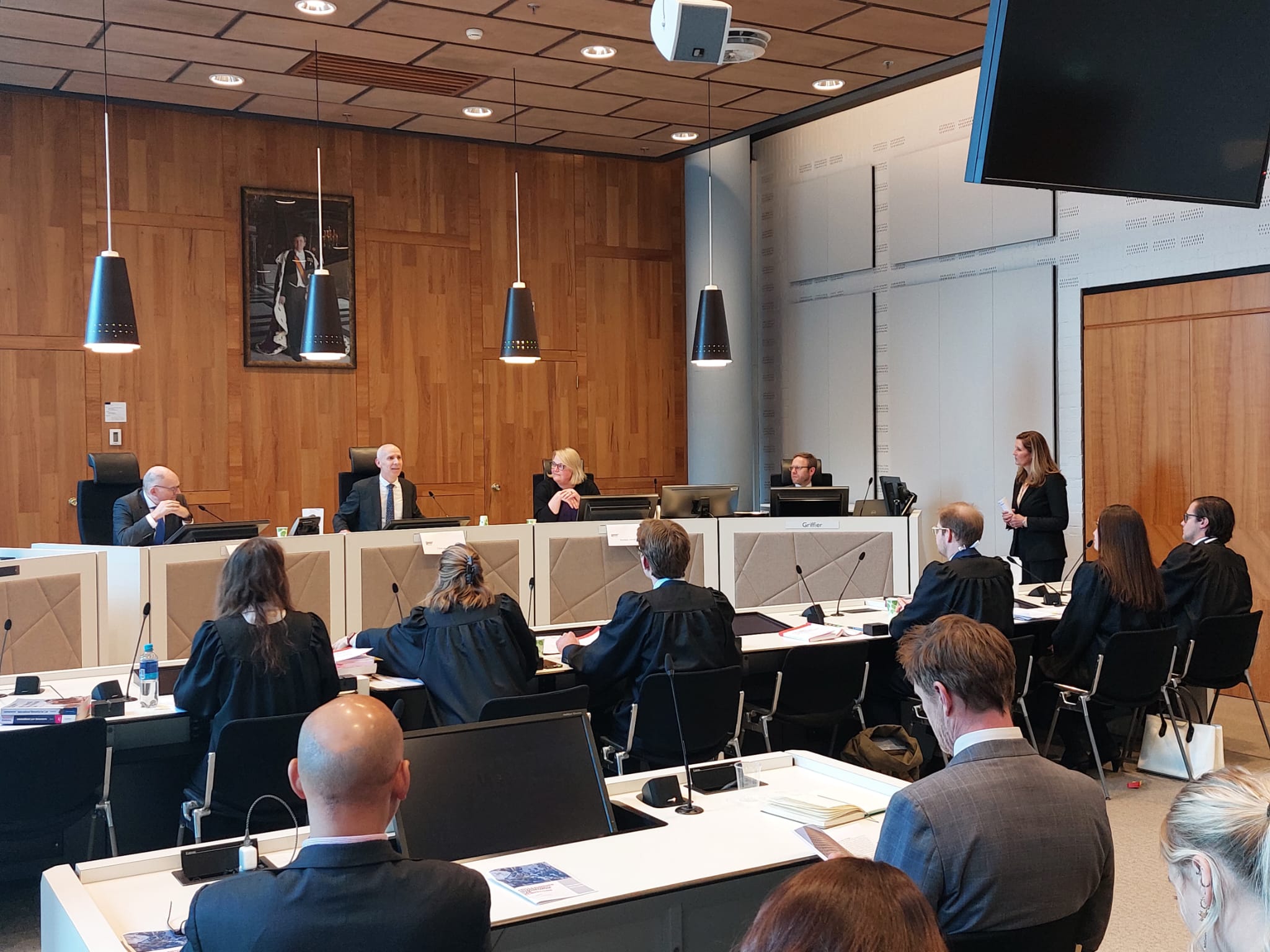
The Frits Kalshoven Competition is entering its 19th edition in 2026 and is again organized by Belgian Red Cross-Flanders in cooperation with the Dutch Red Cross. This moot court competition on international humanitarian law is open to law students.
The purpose of this competition is to familiarize students with international humanitarian law by offering lectures and to fuel their oral and argumentative competencies through role-playing and an advocacy competition.
The competition will take place on February 25, 26, and 27, 2026, in The Hague, Netherlands. It is open to teams of three, and the working language is English.
View a compilation of previous editions
Lecture series on international humanitarian law
From April 21 through May 19, 2026, we will be hosting the 28th edition of our lecture series on international humanitarian law (IHL). Over the course of five weeks, we will explore the core themes of international humanitarian law on Tuesday evenings.
The lesson series begins with an introductory presentation on the sources, scope and actors of IHL. Subsequent lessons further explore the protection of persons and property, the rules regarding weapons and methods of warfare, and the punishment of violations of IHL. We conclude the series with a lesson on a current topic. Each lesson focuses on concrete examples and interaction.
For each session, we will be joined by experts, academics, or professionals actively involved in the practical application of the IHR. Afterward, we count on the active participation of the attendees to facilitate a Q&A session. The detailed program is provided below.
Certificates and approvals
- Participation Certificate: All participants will receive a certificate of participation based on their attendance which will be recorded by the organization team.
- Accreditation by the Flemish Bar Association: confirmed.
- Accreditation by the Institute for Judicial Training: confirmed.
The Institute for Judicial Training will cover the registration fees—25 euros per person per session, or 120 euros per person for the entire course series—for judges, judicial trainees, and judicial staff for the aforementioned training program from its budget, provided that they are actually present at the training. For those who register but do not actually attend or do not actually follow the livestream, the Institute for Judicial Training will not cover any costs. However, substitution by a colleague is permitted; the substitute must then sign next to the name of the colleague being substituted, stating their name and position.
When
Every Tuesday evening from 7:00 PM to 9:00 PM from April 21 through May 19, 2026.
Where
The first four classes will be held online. The final class will be held in person at a location to be determined near Brussels-Central Station.
Price
The price for the entire course is 120 euros.
For a single lesson you pay 25 euros.
Subscribe
Program
- Lesson 1: Introduction to IHL - April 21, 2026
Tycho De Vriendt, Staff Member, International Humanitarian Law
This general presentation provides an introduction to IHL. After a brief description of the genesis of IHL, the scope, the actors involved and the basic rules of this branch of law are discussed. Furthermore, it looks at how human rights and IHL relate to each other. All this is illustrated through recent examples.
- Lesson 2: Protection of Persons and Property under the IHL – April 28, 2026
Jean-Marie Henckaerts, Legal Advisor at the ICRC and Head of the unit responsible for updating the ICRC’s commentaries on the 1949 Geneva Conventions and their 1977 Additional Protocols
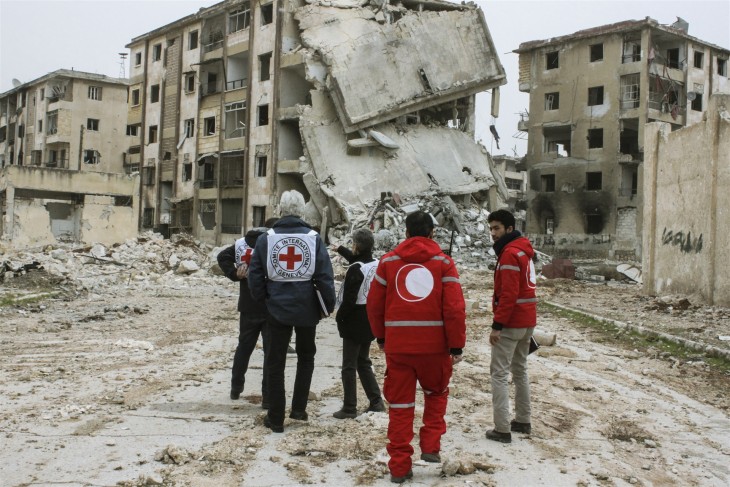
In this lesson, we take a closer look at the protection of persons and property in situations of armed conflict. What does IHL say about the protection of civilian populations, persons on the run, aid workers, and prisoners? How are civilian infrastructure, nuclear power plants, and cultural patrimony protected? We illustrate an overview of the main rules of IHL with the help of some current situations. Finally, we also consider the role the Red Cross assumes on protection.
- Lesson 3: The Means and Methods of Warfare – May 5, 2026
Ministry of Defense Karel Peeters, Legal Advisor for the Operational Law Section of the Ministry of Defense’s Legal Service
IHL contains provisions regarding the means and methods of warfare. In any armed conflict, there are limits to what means and methods that may be used by the warring parties. During this class we will go over the applicable rules and principles governing these. It looks at how these obligations are put into practice during the planning and execution phase of contemporary military operations. All this will be based on practical examples from contemporary conflicts.
- Lecture 4: Punishment for Violations of International Humanitarian Law – May 12, 2026
Steven Dewulf, Professor of International Law (KMS) and International Criminal Law (UA)
What about compliance and punishment for IHL violations? This is a common question. In this session, we will explore this further through a brief analysis of relevant treaties such as the Geneva Conventions. These, for example, oblige States Parties to identify and punish perpetrators in cases of grave violations of IHL. The responsibility and monitoring of this compliance is a shared responsibility between nation states and its courts and tribunals and international bodies and courts. Here, the Belgian framework of punishment for violations of IHL will be highlighted, as well as the international landscape. This interaction between international and national bodies will also be explored in more detail.
- Lesson 5: Naval Warfare – May 19, 2026
Frederik Rogiers, PhD researcher and assistant at Ghent University
The sea may have been a strategic theater of conflict for centuries, but today its importance is greater than ever. Maritime routes are the lifelines of the global economy, the internet cannot function without undersea cables, and the seas themselves are crucial for energy supply and food security. Armed conflicts at sea pose not only military but also humanitarian challenges. This final lecture examines international humanitarian law (IHL) at sea, how civilian and military objects can be distinguished, what protections ships and persons at sea enjoy, and when these protections lapse. This also requires an understanding of the territorial scope of application and the relationship with applicable international law of the sea. We will discuss historical treaties, such as those of The Hague and Geneva, as well as modern codifications of customary law, such as the San Remo Manual and the Newport Manual. We will also examine means and methods of warfare at sea, ranging from mines and submarines to autonomous weapon systems. The lecture is illustrated with current examples such as the Russian-Ukrainian conflict in the Black Sea, the attacks by Houthi rebels in the Red Sea, the Israeli blockade of Gaza and the detention of the Summud Flotilla, and U.S. operations against drug shipments in the Caribbean Sea. In addition, we will examine threats to undersea cables, pipelines, and wind farms. Overall, this session aims to provide insight into how (international humanitarian) law is adapting to an increasingly complex maritime theater of operations and what challenges this poses for the protection of people and infrastructure.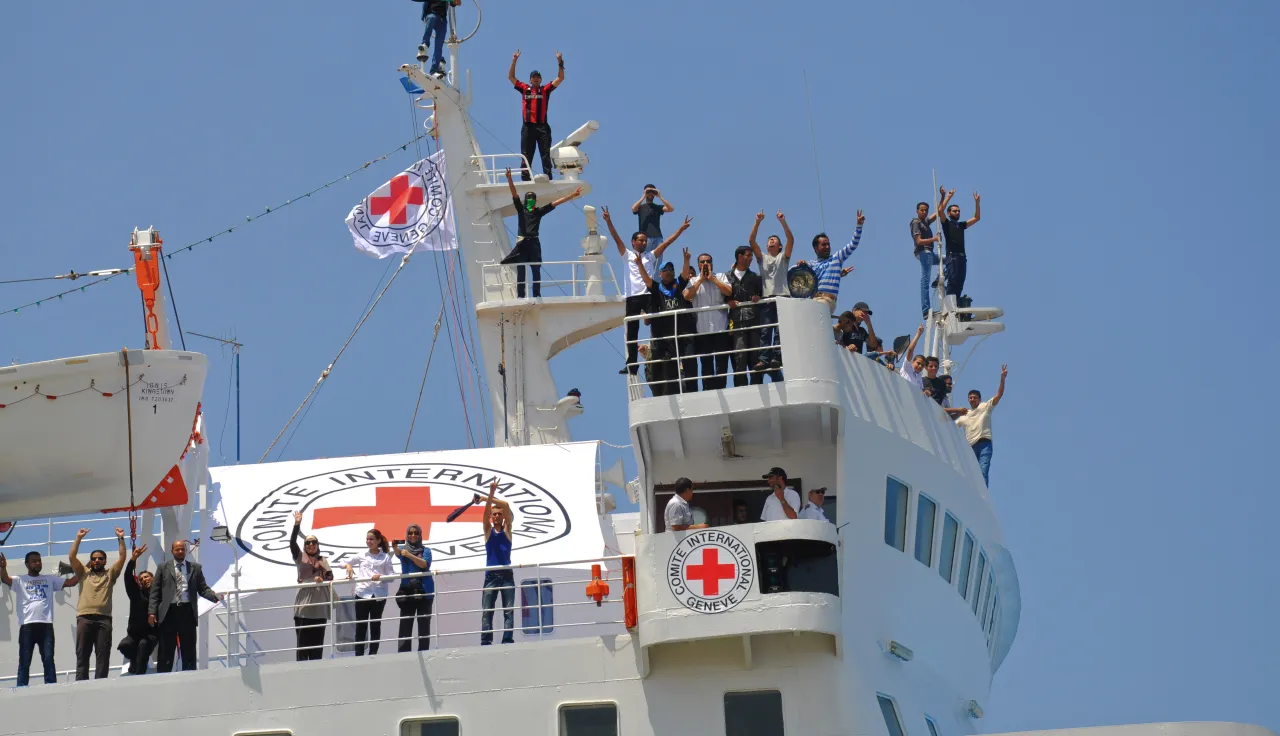
For more information: humanitair.recht@rodekruis.be

Our Publications
This brochure aims to clarify what IHL is, what role Belgian policymakers can play in the implementation and further development of IHL, and how the Belgian Red Cross can support policymakers in doing so.
This brochure is intended to provide clarity about IHL by providing answers to frequently asked questions about its contents.
International humanitarian law is defined in the Geneva Conventions, or Geneva Conventions. The first Geneva Convention was drafted in 1864 on the initiative of Red Cross founder Henri Dunant. An eyewitness to the battle of Solferino, he called for international rules on warfare with an eye toward greater humanity. The current set of four treaties dates from 1949 and was later supplemented by three additional protocols.
How can you help?
Attend training and help ensure further dissemination
Keep an eye on our trainings & events if interested.
Become an IHR intern/volunteer
- Do you have knowledge of international law and a basic understanding of international humanitarian law?
- Do you speak English and French fluently?
- Would you like to support our service, both logistically and in terms of content?
Then keep an eye on our job openings and who knows, maybe you'll be joining us for an internship soon.
Evaluations & management responses
Our operation is partly funded by project funding. We publish the mid-term and final evaluation reports here: