
Conflict in Sudan
Sudan has been embroiled in a violent conflict for more than two and a half years. The impact on the population is enormous, yet this crisis receives hardly any attention.
Out of a population of 50 million Sudanese, more than 30 million people depend on aid. More than 12 million people are displaced, which is equivalent to the entire population of Belgium. This means that Sudan currently has the highest number of internally displaced persons in the world. Many live in refugee camps, but also on the streets or in public or religious buildings.
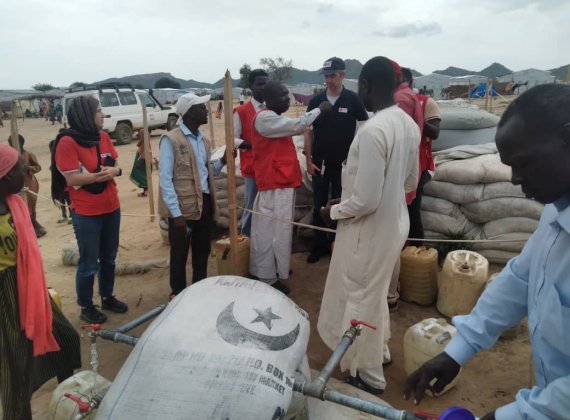
What is the local situation?
The situation is dire. According to estimates from April 2024, 70 to 80 percent of health centers in the conflict zones are no longer operational. As a result, two-thirds of the population has no access to basic health care. The consequences are dramatic: women give birth without medical assistance, the wounded receive no care, and people with chronic illnesses have nowhere to seek treatment. This leads to a sharp increase in deaths and long-term injuries.
Civilian infrastructure is also suffering severely from the ongoing fighting. Water and electricity supplies, as well as communication lines, are repeatedly being hit. This damage is worsening living conditions for the local population. Furthermore, when safe water supplies are cut off, the risk of disease outbreaks increases. For example, Sudan was recently hit by another cholera outbreak.
In recent months, violence has flared up again in various regions. The United Nations has since declared a famine in two cities, Al-Fashir and Kaduqli, in addition to the five areas in North Darfur where a famine was already underway by the end of 2024.
The consequences of the conflict extend beyond the country’s borders. Many Sudanese are fleeing to neighboring countries such as Chad and South Sudan. These refugee flows pose new challenges for the host communities, which often face shortages of food, shelter, and basic healthcare themselves. As part of its long-term projects, Belgian Red Cross-Flanders also Belgian Red Cross-Flanders support to Sudanese refugees in refugee camps in Uganda.
How are the Red Cross and the Red Crescent responding to this disaster?
The Sudanese Red Crescent and the International Committee of the Red Cross (ICRC) are active on the ground. They distribute food and emergency relief supplies, provide financial assistance to affected families, support hospitals and health clinics, offer assistance in displacement camps through activities for children and safe spaces for women, and repair water systems.
By 2024, they will have:
- Food distribution provided to more than 230,000 people
- Nearly 100,000 people have received relief supplies
- Nearly 380,000 people have been provided with financial assistance
Yet even they are not immune to the violence. Volunteers and aid workers are sometimes targeted themselves. Recently, five volunteers from the Sudanese Red Crescent were killed during a food distribution in Bara. Two volunteers are still missing. Since the outbreak of the conflict, 21 employees of the organization have been killed while carrying out their humanitarian work.
This is unacceptable! Under international humanitarian law, humanitarian workers must be protected wherever they are working. The emblems of the Red Cross and the Red Crescent must always be respected.
Those most affected
As a result of the conflict, prices have skyrocketed in the affected areas. It is difficult for families to make ends meet
In conflict situations, the people most affected are often children, women, and the elderly. They feel the impact of war most acutely and most quickly. To address this, the Sudanese Red Crescent, in collaboration with the German Red Cross, launched a project that provides cash assistance to pregnant women. These women often live alone without any support or anyone to care for them and their children. Both the women and the children are in need of food, healthcare, and other essentials.
What does Belgian Red Cross-Flanders do?
At the start of the conflict in April 2023Belgian Red Cross-Flanders €150,000 from its emergency relief fund to support the relief efforts of the Sudanese Red Crescent. These funds were used to provide life-saving supplies, such as food and drinking water.
Furthermore, Belgian Red Cross-Flanders 2024, Belgian Red Cross-Flanders , with support from the Flemish Government, has been supporting a project led by the Sudanese Red Crescent and Red Cross partners in the country to provide cash assistance to those affected. The project provides financial resources to help affected families meet their most urgent needs. Families use these funds, among other things, for:
- the purchase of food
- medical expenses
- safe housing
- access to drinking water
- and improving their livelihoods (for example, by starting a small shop or business).
As part of its long-term projects, Belgian Red Cross-Flanders also Belgian Red Cross-Flanders support to Sudanese refugees in refugee camps in Uganda.
Cash assistance is one of the few forms of aid that still works effectively in the current context. It not only gives people the means to survive, but also the freedom to decide for themselves how to spend their resources, based on their current needs. At the same time, it strengthens the local economy, as the money continues to circulate within the community.
In addition, we call for compliance with and respect for international humanitarian law.
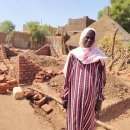
Since the conflict began in April 2023, my family and I have fled from Khartoum to Damazine. With the financial assistance provided to pregnant women, I was able to start a small business selling local coal. That business is now helping us survive and build a home. I am grateful to the German Red Cross and the Sudanese Red Crescent for their support.
Hanan Mohammed Haroun
Victim, who received financial assistance to support her family
How can you help?
Donations are welcome at BE53 0000 0000 5353, with the reference "Sudan Conflict." Every contribution, large or small, helps save lives and address the most urgent needs. Your support will be used to strengthen the Sudanese Red Crescent's cash assistance program.
If you have family in Sudan with whom you have lost contact, please contact our Restoring Family Links service at www.restoringfamilylinks.be or via rfl@rodekruis.be.