Rare blood groups

Blood Types in Simple Terms

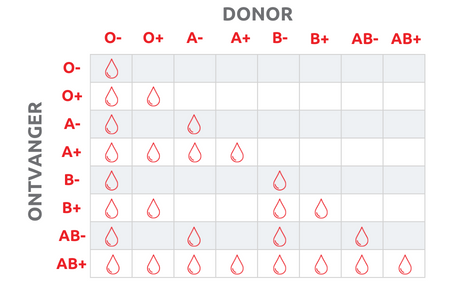
Most people know that there are four major blood types: A, B, AB, and O. TheRh factor (+ or -) also plays a role. Together, these determine your blood type. People who are O-negative (O-) are often called “universal donors” because, in principle, their blood can be given to anyone.

However, it’s not always that simple: in addition to the ABO and Rh systems, there are many other blood group systems. These can also be important in blood transfusions or during pregnancy.
How exactly does that work?

Our red blood cells carry antigens, which are a type of marker made up of glycoproteins.

  • If you receive blood containing an antigen that you don't have yourself, your body may produce antibodies against that antigen. This process is called alloimmunization.
  • These antibodies attack the foreign red blood cells, causing them to break down. This can lead to life-threatening reactions during a subsequent transfusion.
  • The ABO system is an exception to this rule because antibodies against antigens not present on your red blood cells are already naturally present.
  • The following applies to the Rh system and other blood group systems: antibodies against antigens that you do not possess yourself are only produced after exposure to “foreign” blood (for example, following a transfusion or pregnancy).

Example:

  • People with blood type O do not have A or B antigens. As a result, they naturally produce antibodies against both A and B. Therefore, they can only receive blood from other people with blood type O.
  • If a Rh-negative mother is pregnant with a Rh-positive baby, this can cause problems: the mother may develop antibodies against the baby’s Rh antigens, which she herself does not have. These antibodies can attack her baby’s red blood cells and cause problems, especially in a subsequent pregnancy with a Rh-positive baby. For this reason, the mother receives treatment to prevent these antibodies from forming.

Rare blood groups

In addition to the ABO and Rh systems, there are more than 40 other blood group systems (such as Duffy, Kell, and Lewis). Each system has its own variants (for example, there are more than 50 in the Rh system).

  • Some antigens are present in almost everyone, but are absent in a very small group of people.
  • If you have such a rare blood type, it can be very difficult to find a suitable blood donation.

It is not possible to determine which variant all donors have for all these different blood group systems. However, we can conduct targeted searches for specific variants—for example, among donors who have a sibling with a rare blood group—as well as among donors of a particular ethnic background. After all, blood groups have a genetic basis; certain variants are therefore more likely to occur among people who share the same ethnic background.

How do we go about this in practice?

  • Based on donors’ ethnic backgrounds, we specifically look for blood group variants that are rare among Western Europeans (Caucasian ethnicity) but are known to be more common among people of other ethnic backgrounds. This allows us to better assist patients who require rare blood types.
  • Blood containing rare antigens is sometimes frozen so that it can be stored for much longer.
  • In the case of scheduled surgeries, a patient with a rare blood type can sometimes donate blood in advance, which can then be transfused back to them in the event of blood loss.
  • In emergencies, when there really is no suitable blood available, the “least unsuitable” blood may sometimes have to be administered, under strict supervision and with medication.

In short

Your blood type is much more than just A, B, AB, or O, and + or -. There are dozens of systems and variants. For most people, this isn’t a problem, but with rare blood types—and especially after alloimmunization—finding a suitable blood match can become very difficult.

As a blood center, our mission is to provide suitable and safe blood to everyone who needs it. That is why it is important to have donors from a wide variety of backgrounds, so that we have a sufficiently diverse blood supply and everyone in need can receive safe blood.